

Blog
8 Innovative Building Materials for Commercial Buildings: Review of the Latest Trends

Innovative Materials for Commercial Buildings: A Review of the Latest Trends
Innovative building materials play a crucial role in the modern construction industry. The demand for materials that are both sustainable and high-performance is constantly growing. This is particularly true for commercial buildings, which place the highest demands on energy efficiency and environmental sustainability. This article provides a comprehensive overview of the latest trends in materials science that have the potential to fundamentally change the way we build.
Introduction
Background and importance of innovative materials
The construction industry faces major challenges, particularly with regard to sustainability and resource conservation. Innovative materials offer the opportunity to not only meet these challenges but even revolutionize construction methods. At a time when energy consumption and the environmental impact of buildings are increasingly becoming the focus of public debate, the use of environmentally friendly building materials is essential.
Target audience and purpose of the article
This article is aimed at professionals from the construction industry, architects, civil engineers, and project managers who are concerned with the topic of sustainable construction and innovative materials. Our goal is to create a comprehensive information resource that supports decision-makers in the selection and implementation of new building materials, thus contributing to improving construction quality.
Current trends in materials science
Sustainability and environmentally friendly building materials
Recyclable materials
Recyclable materials are becoming increasingly important in the construction industry. Reusing construction waste not only conserves natural resources but also significantly reduces the costs of new materials. The use of recycled concrete, for example, demonstrates how sustainable the use of previously used materials can be. Old concrete structures are crushed and incorporated into new mixtures, significantly reducing environmental impact, as documented by Wüstenrot.
Bio-based building materials
Bio-based building materials are a promising alternative to conventional materials and are gaining popularity due to their renewable properties. These materials are not only more environmentally friendly but also often offer excellent insulation properties. One example is the use of wood and other plant-based materials, which have a lower carbon footprint while also being able to be returned to nature to a greater extent.
Functional materials
Self-healing materials
Self-healing materials are revolutionizing the maintenance and longevity of structures. When cracks develop, special bacteria in self-healing concrete activate a process that produces limestone, sealing cracks without human intervention. This minimizes maintenance costs and significantly extends the lifespan of infrastructure, as successful tests in the Netherlands demonstrate.
Smart materials and their applications
Smart materials, such as smart windows, can dynamically adapt their properties to environmental conditions. They are able to regulate their transparency and insulation depending on temperature and lighting conditions. This functionality not only improves living comfort but also reduces energy consumption for heating and cooling. Developments in this area are promising and should be considered by professionals.
Innovative building materials in commercial construction
High-performance concrete
Advantages and applications
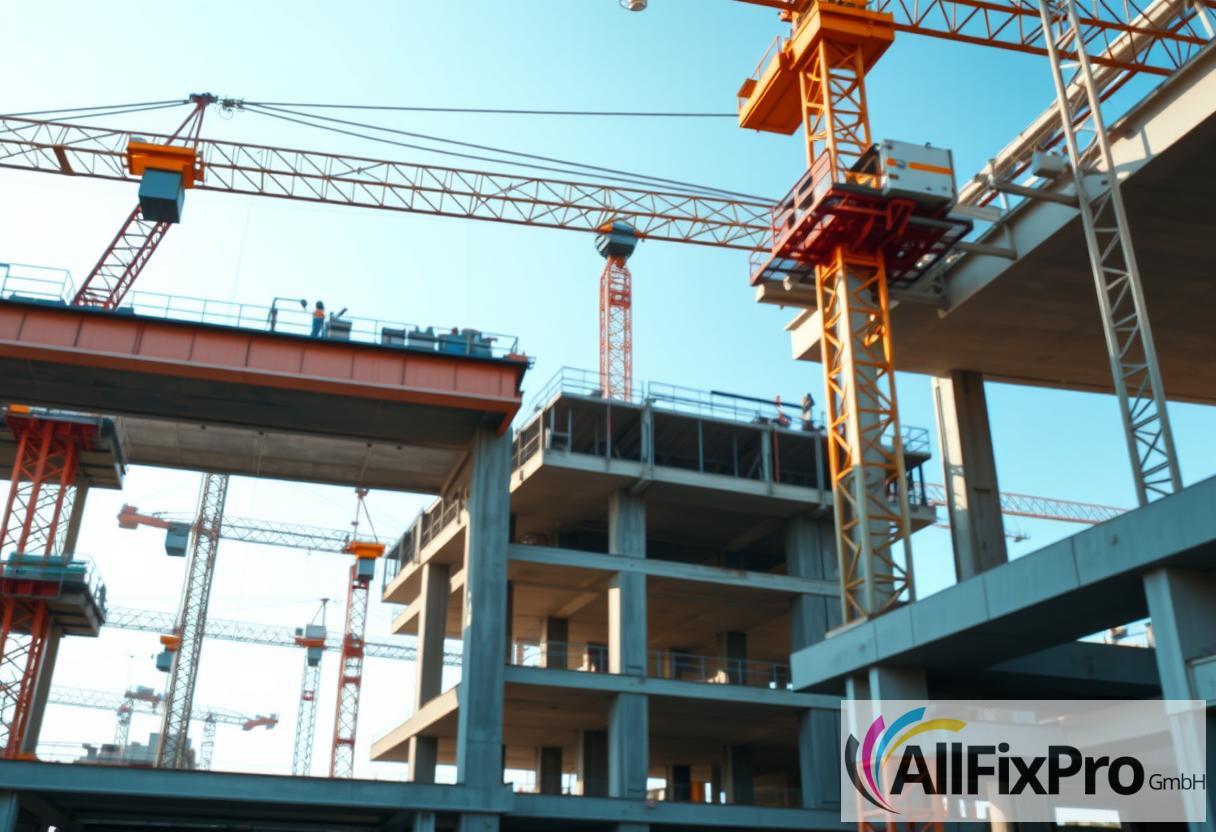
High-performance concrete represents one of the most advanced developments in the field of building materials. Thanks to its exceptionally high strength and durability, it offers significant advantages, particularly in commercial construction projects. Its properties make it ideal for load-bearing structures and infrastructure exposed to extreme stresses. Furthermore, its improved durability compared to conventional concrete reduces the need for more frequent repairs.
Case studies of successful projects
In several major cities, significant construction projects have already been realized using high-performance concrete, meeting both aesthetic and functional requirements. These projects demonstrate the continued demand and effectiveness of high-performance concrete as the building material of choice for innovative, load-bearing structures.
Lightweight materials
Properties and areas of application
Lightweight materials such as aerogel are examples of materials that are setting new standards with their low weight and excellent insulation properties. Aerogel, known as "frozen smoke," makes it possible to achieve maximum insulation with minimal material usage. This building material is perfectly suited to modern insulation techniques and is increasingly used in commercial buildings. Furthermore, it is pressure-resistant and fire-resistant, offering long-term safety and efficiency benefits.
Market analyses and future developments
The continued development and market introduction of lightweight materials is driven by both technological innovations and pressure to reduce costs. Future research efforts will focus on improving manufacturing techniques and integrating these materials into existing construction practices.
Digitalization and the role of innovative building materials
Digital technologies in materials development
3D printing in the construction industry
3D printing is revolutionizing not only the production of components, but also the design and cost structure in the construction industry. The ability to create complex geometries and customized solutions directly on site significantly reduces material waste, enabling faster and more cost-efficient construction.
Simulation and virtual material testing
Simulation technologies offer the opportunity to test materials and structures for their properties in a virtual environment. This enables a more precise and efficient development phase before conducting real physical tests. The results of these tests can then be used to select and optimize innovative building materials.
Networking and automated construction processes
Internet of Things in construction
Connecting materials and construction processes via the Internet of Things (IoT) is a further step toward increasing efficiency. Smart devices can provide real-time data on the condition of materials and construction projects, leading to improved decision-making and thus cost savings.
Increasing efficiency through digital solutions
Digital tools and solutions not only promote efficiency but also help increase transparency in the construction industry. The integrative approach, which involves all project stakeholders, optimizes the planning and implementation of construction projects.
Challenges and opportunities in the use of innovative building materials
Technical and economic challenges
Cost-benefit analysis
The adoption of innovative building materials is often hampered by high initial costs and uncertainties regarding their long-term financial benefits. A detailed cost-benefit analysis is required to determine the actual savings over a life cycle. This requires thorough research and planning to ensure that investments are justified.
Standards and regulations
Compliance with building codes and standards presents another challenge. Innovative materials must not only meet safety standards but also be approved by the relevant authorities. The impact of current standards on the approval and use of materials should be well understood by professionals.
Future prospects
Research trends and developments
Continuous research in materials science is driving the development of innovative building materials. Trends show a clear focus on sustainable, efficient, and multifunctional building materials that combine both ecological and economic benefits. The construction industry faces exciting opportunities to shape the future in a more sustainable and technologically advanced way.
Implementation strategies
The strategic implementation of innovative building materials requires close collaboration between manufacturers, architects, and construction companies. To successfully integrate these materials, it is important to offer training and workshops for specialist personnel. This is the only way to ensure that all parties involved can fully exploit the benefits and possibilities of new materials.
Conclusion and outlook
Overall, trends in materials science demonstrate that innovative building materials can make a decisive contribution to the transformation of the construction industry. The use of sustainable and high-performance materials not only opens up ecological perspectives but also guarantees economic benefits. Professionals should therefore not hesitate to learn about these developments and integrate innovative solutions into their projects. These changes are necessary to meet the demands of modern construction projects.
Effective implementation of these innovative building materials can not only improve the quality of construction projects in the long term, but also contribute to ensuring competitiveness in a rapidly changing industry. With a solid understanding of the opportunities and challenges, construction professionals can actively shape the change.
Over 300 completed projects in Germany confirm Allfixpro GmbH's reliability as a partner for sophisticated interior design. Our core message is: "With Allfixpro, you get first-class workmanship at a fair price – guaranteed on time."
- Quality: High-quality materials & certified processes.
- Price: Transparently calculated offers with no hidden costs.
- Deadline compliance: Binding deadlines, daily progress reports.
- Competent team: Specialists with proven expertise.
Call us today: +49 151 688 460 60, and secure your free consultation!
Allfixpro GmbH · Your partner for sophisticated interior fittings.
For further information and trend-oriented developments in the field of innovative building materials, please visit Living Green.
The knowledge described about innovative building materials can help you make the best decisions for your projects.


 English
  German
  Arabic
  Czech
Czech  Bulgarian
  Spanish
  Italian
  French
  Romanian
  Ukrainian
  Russian
  Croatian
  Polish
  Dutch
Dutch