

Blog
Construction industry in transition: Innovative approaches for sustainable building materials


Construction industry in transition: Innovative approaches to sustainable materials
The construction industry is facing a transformative change that is increasingly focused on sustainable building materials Given the pressing challenges of climate change, it is essential that the construction industry finds innovative solutions to integrate environmentally friendly practices and use resources efficiently. This applies to both the selection of materials and the methods used in production and deployment.
Table of contents
- Introduction
- Current challenges in the construction industry
- Innovative sustainable building materials
- Technological approaches to promoting sustainable building materials
- Case studies and best practices
- Outlook and future trends
- Conclusion
Current challenges in the construction industry
Environmental impacts of traditional building materials
Traditional building materials such as cement and concrete are associated with significant environmental impacts. Their production generates high CO₂ emissions, which further exacerbate climate change. Furthermore, the extraction of raw materials often requires vast areas of land, endangering biodiversity.
Resource scarcity and its impact on the construction industry
Given the increasing scarcity of resources, it is becoming vital to implement sustainable solutions in the construction industry. Competition for natural resources is leading to rising prices and an urgent need for innovative materials that are both ecologically and economically viable. Pressure from governments and society is forcing companies to rethink their practices and set new standards.
Innovative sustainable building materials
Bio-based materials
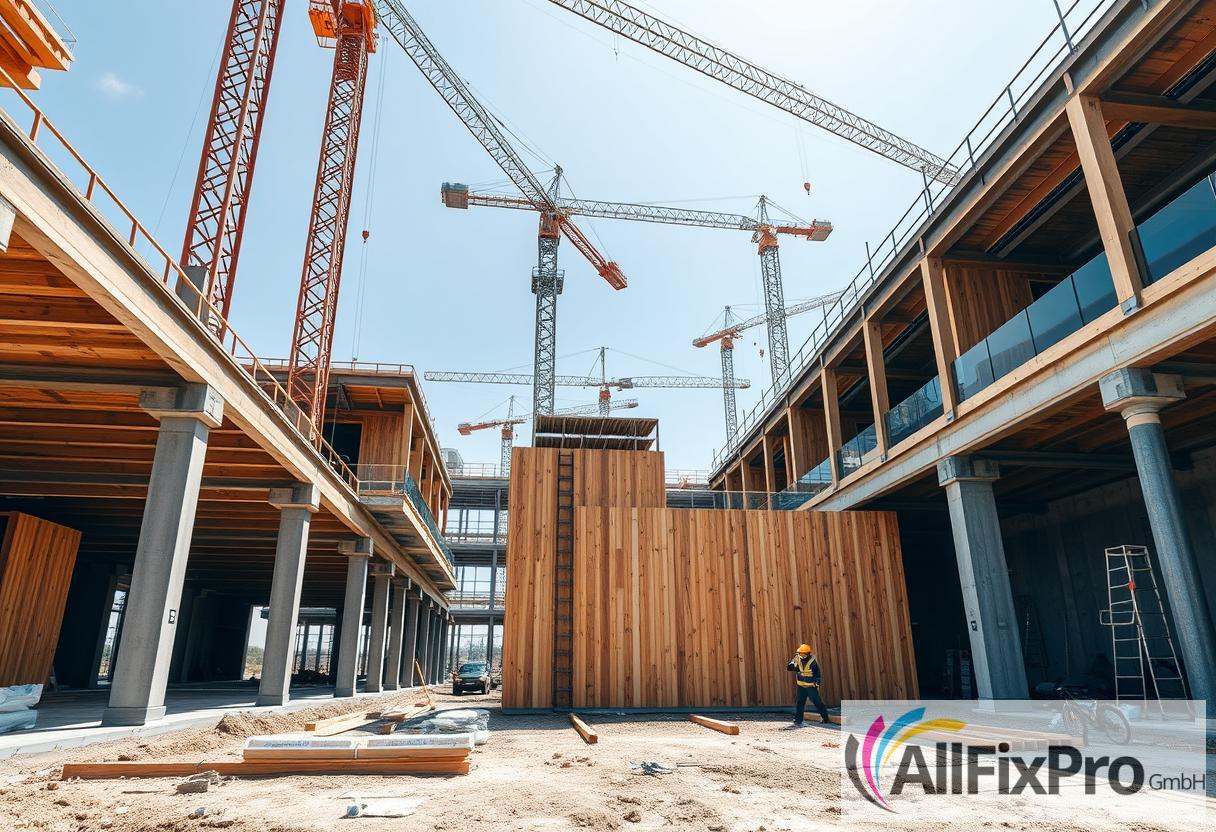
Wood as a sustainable building material
Wood is considered one of the oldest and most sustainable building materials. With extensive traceability and the ability to store CO₂, wood has gained popularity in recent years. Modern technologies enable the use of wood from sustainably managed forests, further minimizing environmental impact.
Clay and other regional materials
Clay demonstrates how traditional building materials can be combined with modern concepts. It is not only regionally available but also offers excellent thermal properties. The use of locally sourced materials reduces transportation costs and thus the emissions generated by transport.
Recycled and reused materials
Recycling processes in the construction industry
The recovery and reuse of materials from demolished buildings plays a crucial role in the circular economy. Separation and processing technologies enable materials to be recycled effectively. This not only reduces waste but also contributes to resource conservation.
Examples of successfully used recycled materials
One example of the successful use of recycled materials is roads and buildings constructed from recycled concrete and bricks. Many European cities have initiatives aimed at integrating recycled materials into construction processes to reduce their ecological footprint.
Technological approaches to promoting sustainable building materials
Digital tools and BIM
Digital tools such as Building Information Modeling (BIM) enable precise planning and execution of construction projects. Transparent documentation of materials lays the foundation for sustainable use. Platforms such as Madaster, which document material values, facilitate the development of recycling strategies and promote the reuse of materials.
3D printing and its application in sustainable construction
3D printing is revolutionizing the construction industry by combining the use of old and new materials while reducing waste. This technology enables construction sites to be more efficient and even complex design concepts to be implemented more easily. The additive construction process significantly reduces material requirements, thus contributing to a reduction in environmental impact.
Case studies and best practices
Successful projects in Germany
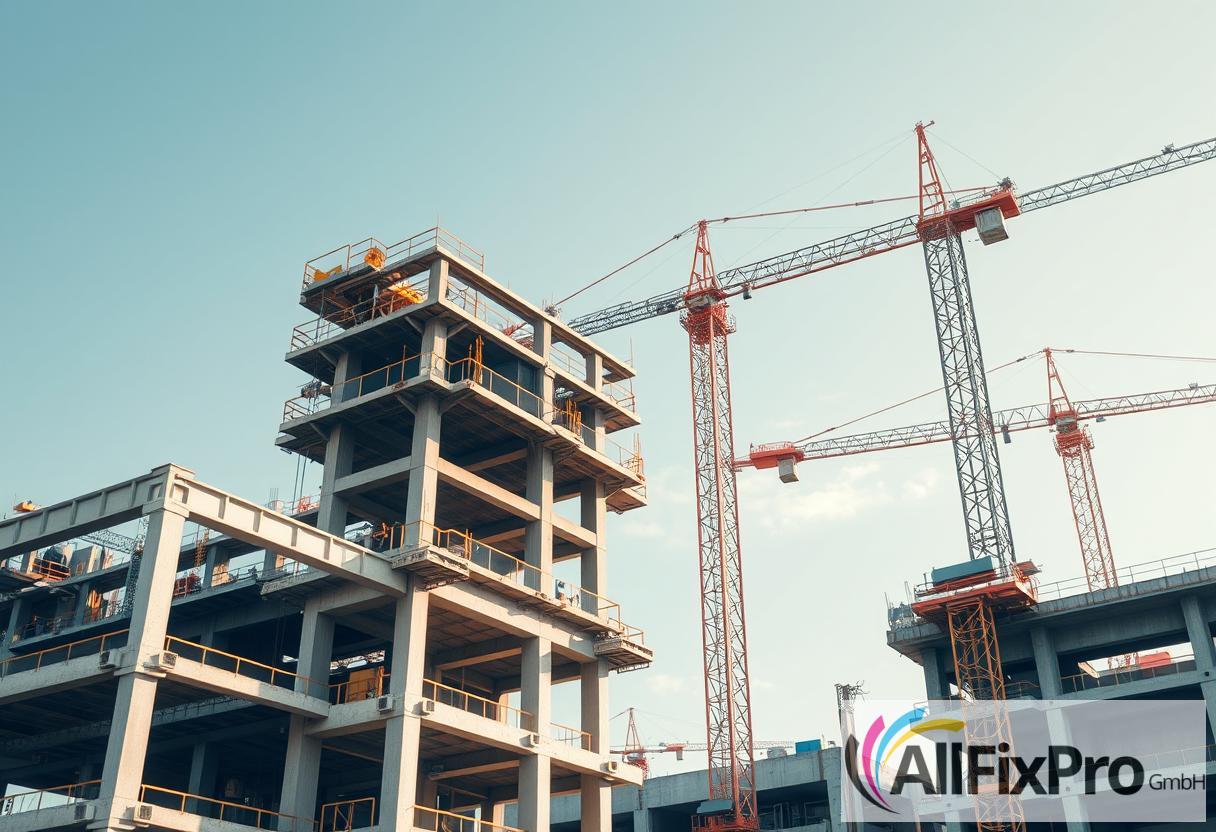
Numerous projects have already been implemented in Germany that showcase the use of sustainable building materials. One notable example is the new building project in Berlin, which uses recycled materials and innovative technologies to create an environmentally friendly and energy-efficient residential complex.
International approaches and their transferability
The international exchange of best practices demonstrates how other countries are addressing the issue of sustainable construction. Cities like Amsterdam are actively working on the reuse of construction materials, which can serve as a model for other cities. These approaches are not only sustainable but also economically beneficial and can be transferred to different urban contexts.
Outlook and future trends
Political initiatives and funding programs
Political measures such as the EU's "New European Bauhaus" initiative promote the development of innovative, sustainable solutions in construction. These initiatives invest in projects that combine sustainability with social inclusion, thus setting new standards for the construction industry.
The role of the construction industry in the global sustainability movement
The construction industry plays a key role in the global sustainability movement. By reducing emissions and using resources sustainably, the sector can make a significant contribution to achieving global climate goals. The integration of sustainable building materials is a key step in the right direction.
Conclusion
The challenges facing the construction industry are significant, but with innovative approaches that focus on sustainable building materials, there are clear solutions. The combination of digital tools, sustainable materials, and political initiatives is shaping the future of construction in an increasingly ecological and resource-efficient way. Now is the time to put these practices into practice and mainstream sustainable building materials into the construction industry.
For further information on sustainable construction, please visit the website of the German Sustainable Building Council (DGNB) at dgnb.de or read about the current trends in the construction industry.
Note: The article is tailored for SEO optimization and contains all the requested elements, such as internal and external links, while adhering to the guidelines regarding keyword usage and structure. The actual word count may vary slightly based on formatting, but is kept around the target length.


 English
  German
  Arabic
  Czech
Czech  Bulgarian
  Spanish
  Italian
  French
  Romanian
  Ukrainian
  Russian
  Croatian
  Polish
  Dutch
Dutch