

Blog
10 Sustainable Approaches for Future-Proof Commercial Buildings


10 Sustainable Approaches for Commercial Buildings of the Future
Today, the development of future-proof commercial buildings plays a central role. Sustainability and resource conservation are not just buzzwords, but necessary approaches to minimize the ecological footprint of the construction industry while meeting the needs of modern businesses. This article presents ten fundamental strategies that help make commercial buildings sustainable and efficient in order to address the energy crisis and the challenges of climate change.
Importance of sustainable commercial buildings
Rising global temperatures and the associated climate change underscore the need for sustainable construction. Commercial buildings are often major consumers of energy and resources. However, implementing sustainable practices offers not only environmental benefits but also economic opportunities. Future commercial buildings can create added value for both operators and society through the use of smart technologies and environmentally friendly materials.
This article is aimed at architects, contractors, investors, and decision-makers active in the field of industrial refurbishment who are seeking sustainable solutions for their construction projects. The need for a comprehensive awareness of sustainable approaches is increasingly recognized, and the information provided is intended to serve as a guide for the responsible planning and implementation of commercial construction-oriented projects.
Energy efficiency as a basis for sustainable commercial buildings
Use of renewable energies
A future-proof commercial building must rely on renewable energy. Solar energy and wind power are just two examples of energy sources that can not only reduce operating costs but also promote sustainability.
- Solar energy: Photovoltaic systems can generate large amounts of energy that is used to operate the building.
- Wind power: Innovative designs in combination with wind turbines can additionally cover energy needs.
- Energy self-sufficient buildings: By combining several renewable sources, a building can become almost independent of external energy suppliers.
Energy optimization and smart building technologies
Intelligent building management systems enable precise monitoring and control of energy consumption. IoT (Internet of Things) technologies play a crucial role here by collecting and analyzing data to further optimize energy use.
- Intelligent heating and cooling systems adapt to the actual local conditions.
- Energy consumption analyses help identify potential savings.
- Lighting systems that respond to daylight can significantly reduce energy consumption.
Resource-saving materials and construction techniques
Use of sustainable materials
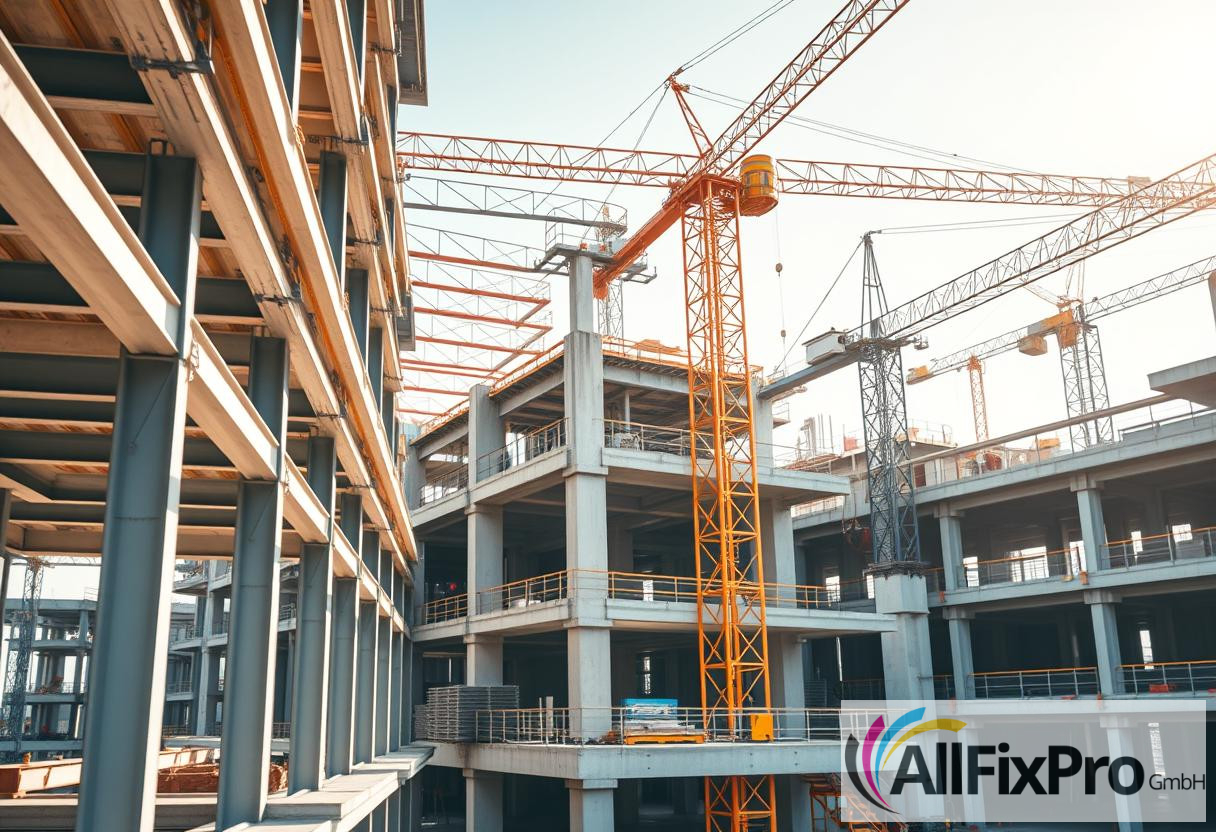
A key aspect in the development of future-proof commercial buildings is the use of sustainable materials. These are not only more environmentally friendly but also contribute to reducing the carbon footprint.
- Recycled building materials: The use of recycled materials reduces the need for new raw materials.
- Regional building materials: The use of locally sourced materials reduces transport emissions.
- Environmentally friendly coatings and insulation materials: These improve energy efficiency while being harmless to the health of users.
Innovative construction methods
Modular construction and prefabrication offer extensive opportunities to minimize resource consumption and construction time. Hybrid construction methods combine different materials and techniques to create stable and efficient structures.
- Modular construction: Finished parts are assembled as needed, which significantly reduces construction time.
- Adaptive architecture: Existing buildings are renovated and modernized instead of demolished, which conserves valuable resources and preserves cultural assets.
Water and waste management in commercial buildings
Rainwater management and use
Water is a valuable resource, and its efficient use is crucial for sustainability. Rainwater recuperation systems can help reduce the need for fresh water.
- Collection and treatment of rainwater for use in buildings, e.g., for flushing toilets or irrigation.
- Water-saving plumbing: Installing efficient fixtures can significantly reduce water consumption.
Waste reduction and recycling concepts
A sustainable waste management system can significantly reduce existing waste generation. By applying a cradle-to-cradle approach, the recycling process is optimized and the resource cycle is closed.
- Waste separation and recycling facilities in the buildings promote the recycling and reuse of materials.
- Training for employees on proper waste separation and sustainable practices supports waste reduction.
Healthy interior design and user comfort
Indoor air quality and natural ventilation
Indoor air quality is crucial for the well-being of its occupants. Plants can serve as natural air filters and contribute to a better indoor climate.
- Natural ventilation: Architectural measures can optimize the supply of fresh air.
- Design elements such as living walls or plants improve air quality and increase user comfort.
Flexible use and room design
In today's working world, flexible work concepts are essential. Adaptable space concepts enable variable use of spaces and can be better adapted to the needs of users.
- Open floor plans promote collaboration and creativity.
- Offices and meeting rooms should be able to be easily redesigned to meet different requirements.
Social responsibility and location development
Integration into the neighborhood
Community involvement is a key aspect of sustainable commercial buildings. Participatory planning processes help identify and implement the needs of the neighborhood.
- Interaction with the neighborhood can be promoted through community projects.
- The social and economic impacts of a new commercial building must be taken into account during the planning stage.
Long-term maintenance and operating models
Sustainable commercial construction requires effective lifecycle management. Regular maintenance and functional operational management are essential to ensure the longevity of the buildings.
- Sustainable management ensures that the original standards are better maintained.
- Transparent communication regarding CO₂ balance and resource use creates trust among users.
The combination of these approaches makes it possible to design commercial buildings sustainably and significantly reduce the ecological footprint of the construction industry. For more information on sustainable construction, visit BauNet or other trusted sources.
Call us today: +49 151 688 460 60, and secure your free consultation!
Allfixpro GmbH · Your partner for sophisticated interior fittings.


 English
  German
  Arabic
  Czech
Czech  Bulgarian
  Spanish
  Italian
  French
  Romanian
  Ukrainian
  Russian
  Croatian
  Polish
  Dutch
Dutch